
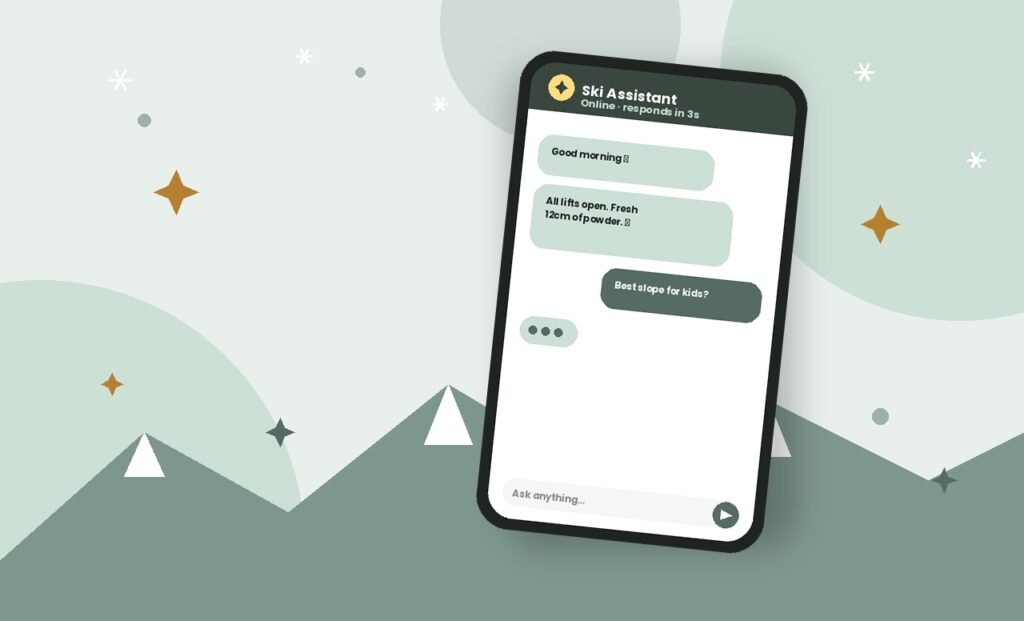
From snow conditions at 7am to lost-and-found at midnight — AI chatbots are quietly becoming the most-used digital touchpoint at major ski resorts. And the data they collect is changing how resorts plan their next season.
Booking windows are shrinking, service expectations are rising, and resort staff are stretched thin during peak weeks. Across the Alps, a quiet pattern has emerged in 2025–26: ski resorts are deploying AI chatbots not as a marketing gimmick, but as core operational infrastructure. And the data those bots are collecting is reshaping the next season’s marketing plan.
From novelty to operational backbone
In December 2025, Saalbach-Hinterglemm rolled out a multilingual AI assistant on its website, app and WhatsApp. By the end of the season it had handled 340,000 conversations — roughly six times the volume their human service desk processed in the same period. Verbier, Zermatt and Val Thorens followed within months with their own versions. What’s driving adoption isn’t the AI itself — it’s the operational reality. Wintersport bookings now happen on average 22 days before departure (down from 47 in 2019), and travellers expect immediate answers about snow conditions, lift openings, accommodation availability and weather, often outside office hours. A chatbot answers in 3 seconds at 2am. A call centre doesn’t.
What chatbots are actually good at
Three use cases consistently deliver value:
- Real-time operational questions. Lift status, slope conditions, weather windows, opening times. The data is already in the resort’s systems — the bot just makes it conversational.
- Pre-trip planning. Route suggestions for ability level, restaurant recommendations on the mountain, equipment rental options, ski school availability. The bot becomes a 24/7 concierge.
- Post-arrival service. Lost passes, route changes, last-minute restaurant reservations, emergency contacts. The bot handles 70%+ of these autonomously, escalating only what truly needs a human.
Where they still fail
Less successful: emotional moments (cancellations after an accident, refund disputes), complex multi-party bookings (group trips with payment splits), and anything requiring genuine local judgement (“is this avalanche risk worth taking?”). Resorts that deployed chatbots as full call-centre replacements ran into trouble fast. The ones that positioned them as the first line — with smooth handoff to humans for everything emotional or complex — got the gains without the backlash.
The hidden data play
The most underrated benefit isn’t service quality. It’s the data trail. Every chatbot conversation captures:
- What questions travellers ask before they book
- Which destinations and dates trigger the most uncertainty
- Where pricing causes hesitation
- What competing resorts are mentioned
For marketing teams, this is gold. The questions a chatbot answered 12,000 times last December tell you exactly what your website FAQ, your social content and your paid campaigns should address next September.
Verbier’s marketing director described it as “a focus group running 24/7, in seven languages, paid for by the customer service budget.” That’s the dual return that’s making CFOs say yes.
What this means for destinations and brands
A few practical takeaways for resort and destination marketing teams:
One: the chatbot belongs to marketing as much as to operations. The conversation data should flow into your CRM and inform next season’s content calendar. If your bot is fully owned by IT, you’re missing half the value.
Two: invest in language coverage early. The biggest wins come from serving German, Dutch, French and English travellers in their own language — not from making one English bot smarter. Multilingual capability is now table stakes.
Three: the chatbot is a brand asset. A bot that sounds robotic or generic damages the experience more than no bot at all. Brief it, give it personality guidance, and treat its training data with the same care as your website copy.
Where this is heading
By 2027, our prediction: chatbots will be the dominant pre-booking research channel for European wintersporters — beating Google search for resort-specific queries. The destinations that own the conversation will compound a year of audience insight ahead of those still routing every question through a form on the contact page.